

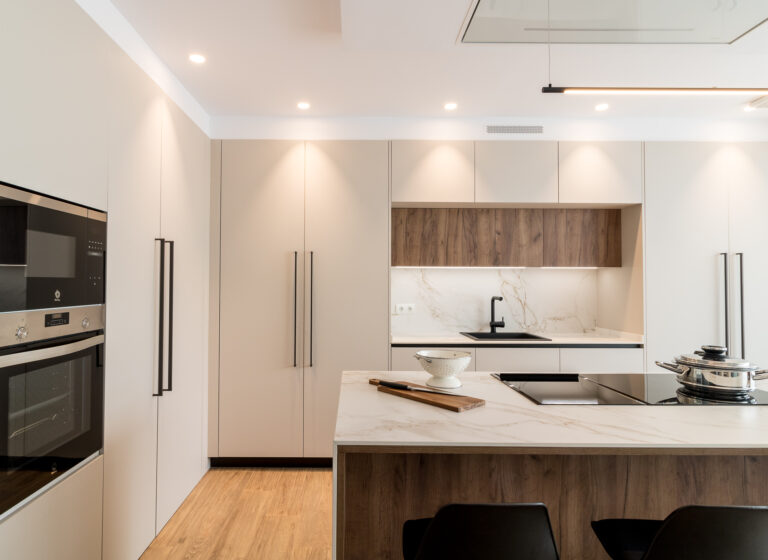
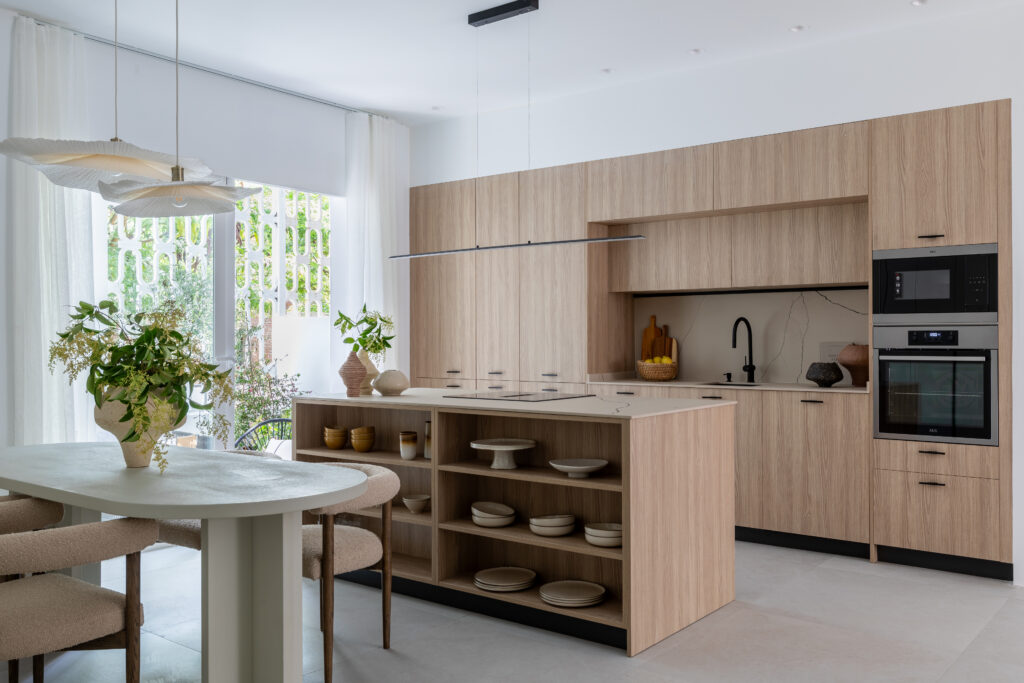
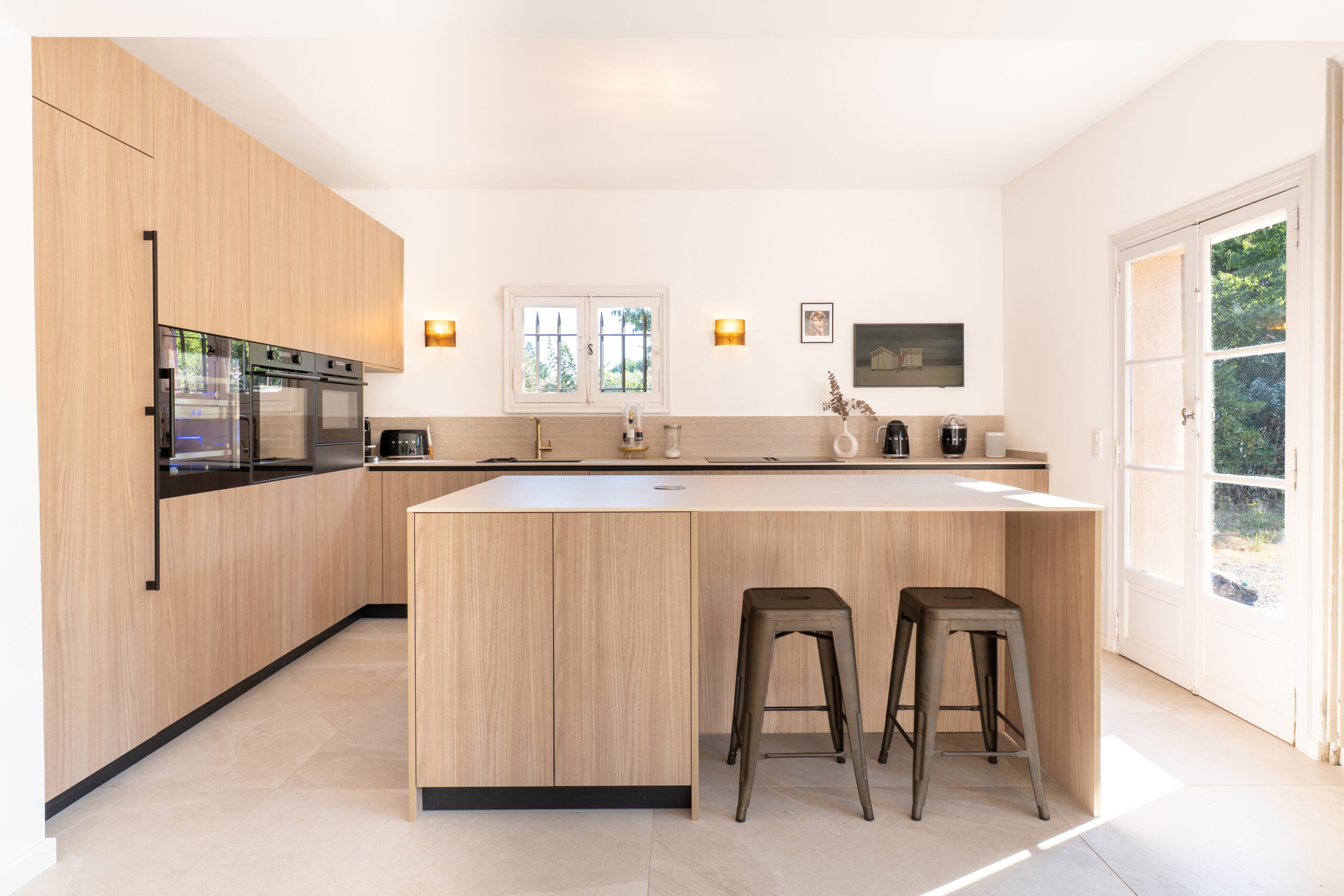
Kitchens with islands have gone from being a trend to become a common solution in contemporary design. Their presence does not respond only to an aesthetic issue, but to a change in the way of understanding and using this space.
The kitchen is no longer an isolated place, but an open environment connected to the rest of the house. In this context, the island acts as a central point that organizes, articulates and gives meaning to the whole.
Incorporating an island means, in many cases, directly improving the functionality of the kitchen. It provides an additional work surface that facilitates the day to day, allows a better distribution of tasks and improves the relationship between the different areas.
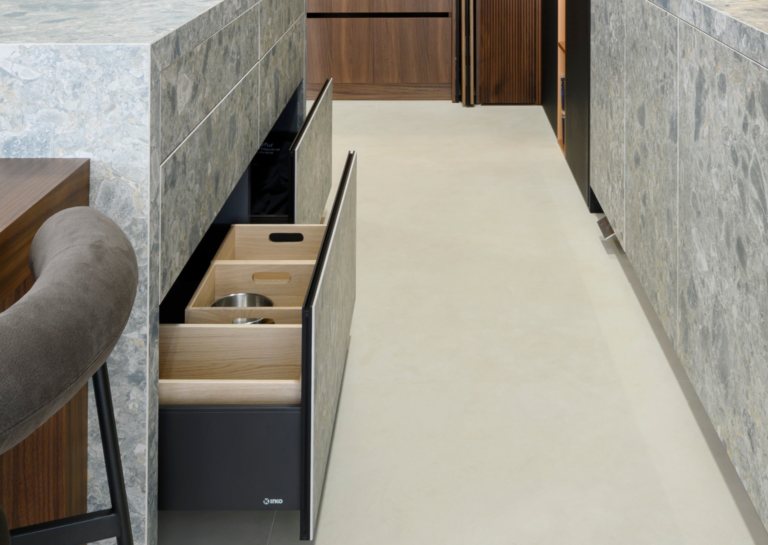
At the same time, it offers an effective solution to increase storage capacity without overloading the rest of the furniture. And, in many homes, it also becomes an informal space in which to eat, work or simply share moments.
This combination of uses is precisely what explains its success.
The key to making an island work is not only in its design, but in how it integrates into the whole.
It is essential that there is a balanced relationship between the island, the rest of the furniture and the available space. The circulation must be fluid, the distances comfortable and the proportion adequate. When these aspects are not respected, the island can lose functionality and hinder the use of the kitchen.
In open kitchens, its role is even more relevant, as it helps to visually connect spaces and structure them without the need for dividing elements.
Beyond its use, the island has an important weight in the aesthetic perception of the kitchen.
It can be integrated in a continuous way with the rest of the furniture or it can be considered as an element that introduces contrast and personality. In both cases, the result will depend on the balance between materials, proportions and design lines.
When these elements are worked coherently, the island ceases to be an addition and becomes a key part of the project.
At INKO, the island is always considered as part of a global design. It is not understood as an isolated element, but as a piece that must respond to the space, the use and the way of living the kitchen.
This approach makes it possible to develop solutions that not only work on a practical level, but also fit naturally into the whole, bringing balance and coherence to the design.
Island kitchens respond to a more open, flexible and connected way of living. Their ability to combine functionality and design makes them a particularly suitable solution for today’s home needs.